
December 4
Last update: November 29th.
7am to 8 am
Welcome and registrations
8am to 8:45am
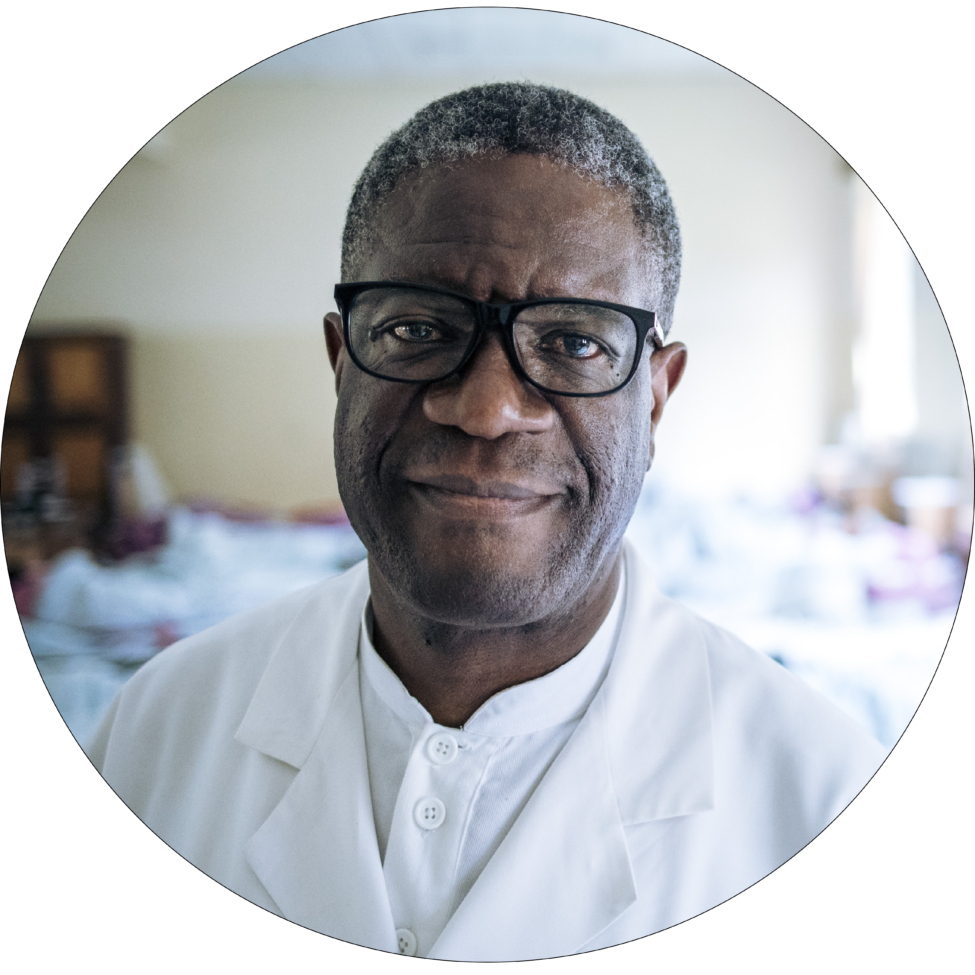
Room 511 - Plenary conference: Ending gender-based violence: women's empowerment and sustainable development
Dr Denis Mukwege Nobel Peace Prize 2018. Founder and President of the Panzi Foundation, Democratic Republic of the Congo
With simultaneous translation in English
8:45 am to 10:15 am - Parallel sessions
Room 511 - Symposium: Preventing Sexual Violence Against Vulnerable Populations
While research and action to combat sexual violence are multiplying, certain populations at increased risk have been largely neglected. Vulnerable individuals, such as children and people identifying with sexual or cultural minorities, face high rates of sexual violence. Yet they are rarely the focus of studies and prevention efforts. The aim of this symposium is to highlight the work of members of the Centre de recherche interdisciplinaire sur les problèmes conjugaux et les agressions sexuelles (CRIPCAS) on the experiences and challenges faced by girls and women from various vulnerable populations, including best practices in prevention and support for them.
Stéphanie Couture (Université de Montréal) will present the results of an international study involving more than 82,000 participants, aiming to identify individuals most at risk of reporting well-being consequences following sexual violence.
Laetitia Mélissa Amédée (Université du Québec à Montréal) will discuss experiences and practices in interventions with children who are victims of sexual assault.
Alexa Martin-Storey (Université de Sherbrooke) will address sexual violence within sexual and gender minorities.
Finally, Jacinthe Dion (Université du Québec à Trois-Rivières) will raise awareness about the experiences and prevention measures concerning sexual violence targeting Indigenous girls and women. This symposium will shed light on the challenges faced by these populations, aiming to foster sensitive and tailored interventions for survivors of sexual violence while promoting the creation of a welcoming and inclusive environment for all within support services.
Co-authors: Beáta Bőthe, Marie-Pier Vaillancourt-Morel, Ateret Gewirtz-Meydan, Martine Hébert, Geneviève Paquette
Room 510a - The memory of sexual and gender-based violence (SGBV)
Presentations
- Entre devoir de mémoire, devoir de réparation et féminisme décolonial : comment lutter contre les violences sexuelles basées sur le genre?
Maria Clara Ahmarani, Université de Montréal, Canada
Co-authors : Denis Mukwege, Marie Hatem
- Decolonizing human rights: gender complementarity in Kinshasa (DRC)
Géraldine Mbolo Ebubu, University of Antwerp, Belgium
- Engendrer la décolonisation de l'imaginaire : une relecture de Frantz Fanon à travers l'œuvre de Ken Bugul
Samuele Ellena, Université de Montréal, Canada
- Interroger les stratégies d’évaluation des programmes d'empowerment en utilisant une approche clinique philosophique des terrains
Cynthia Fleury, Chair in Humanities and Health, Conservatoire National des Arts et Métiers, France Co-authors: Catherine Tourette-Turgis, Mégane Lauffenburger
Room 510b - Alternative therapies to support survivors
Presentations
- Construction et évaluation d’un dispositif de danse comme thérapie en co-animation
Héloise Onumba Bessonnet, LOBA, France
Co-author: Crystal Tomaszweski
- L'art comme outil facilitant la remise en question des rapports de force entre les femmes et les hommes
Pierre Inodyl Fils, Santé Monde, Haïti
Co-authors: Pascale Gravel Richard, Ludzen Sylvestre
- Actions plurielles et thérapie à médiation corporelle sur le terrain du traumatisme
Michèle Quintin, psychologist, Belgium
Room 510c - Needs of women of all ages in vulnerable situations
Presentations
- Enjeux affectant les femmes et les adolescentes en lien avec les zoonoses au Sénégal et au Burkina Faso : l'analyse comparative entre les sexes et le projet ELUZO
Marie Jobin-Gélinas, Unité de santé internationale, Université de Montréal, Canada
Co-authors: Adama Faye, Hélène Carabin, Marie-Douce Primeau, Michèle Bouchard, Zékiba Tarnagda
- Prévenir et contrôler le diabète de type 2 chez les personnes migrantes originaires de l'Afrique subsaharienne : le genre, un des déterminants à ne pas sous-estimer
Gisèle Ntanda, Université du Québec en Outaouais, Canada
Co-author: Léonel Philibert
- Les besoins des jeunes mères ayant reçu des services en protection de la jeunesse : regards croisés d'intervenantes et de jeunes mères sous l'angle du trauma complexe
Marie-Lee Giroux, Université de Sherbrooke, Canada
Co-authors: Anne-Marie Tougas, Geneviève Paquette, Madeleine Prévost-Lemire
- Amélioration du soutien aux survivantes de violences basées sur le genre en milieu communautaire au Mali : des solutions émergeant des besoins auto-identifiés et adaptées aux perceptions locales
Jennyfer Boudreau, Center interdisciplinaire de développement international en santé (CIDIS), Université de Sherbrooke, Canada
Co-authors: Doufain Traore, Drissa Mansa Sidibé, Issa Souleymane Goïta, Michèle Rietmann, Mohamed Togo, Sabina Abou Malham, Souleymane Sidibé, Zeïnabou Siby
10:15 am to 10:45 am : Coffee break and posters
10:45 am to 12:15 pm - Parallel sessions
Room 511 - Symposium: Red Line Against the Use of Rape as a Weapon of War: Survivor-Centered Justice
Together, survivors from the global SEMA network and national survivor networks, together with representatives of the Mukwege Foundation team, will explain how to achieve survivor-centered advocacy for justice. In the Mukwege Foundation's approach, listening to survivors is an essential starting point for any survivor-centered methodology, including justice.
Katrien Coppens, Denis Mukwege Foundation, Netherlands
Vasfije Krasniqi- Goodman, Mouvement des survivant.e.s. en République démocratique du Congo
Shyrete Sulimani, Mouvement des survivant.e.s. en République démocratique du Congo
Room 510a - Gender equality at work: support and careers for women
Presentations
- IMAGINE : initiative de soutien transnational en contexte de guerre entre professionnel(le)s en relation d'aide
Roxane Caron, Université de Montréal, Canada
Co-authors: Aline Bogossian, Emmanuelle Khoury
- Consideration of sex and gender in relation to workplace violence and job insecurity: a consensus study to enhance a work-related musculoskeletal disorder prevention tool
Marcela Marques de Queiroz, Université de Montréal, Canada
Co-authors: Céline Delga, Marcela Marques de Queiroz, Marie-Eve Major, Susan Stock, Valérie Albert
- Women leaders in health systems government in Burkina Faso: what determined their career choice and what challenges do they face?
Orokia Sory, Recherche pour la santé et le développement (RESADE), Burkina Faso
- ELUZO : Co-construction d'interventions pour l'autonomisation des femmes éleveuses et la lutte contre les zoonoses
Marine Hubert, Université de Montréal, Canada
Co-authors: Adama Faye, Hélène Carabin, Jane Parmley, Michèle Bouchard, Zékiba Tarnagda
Room 510b - Obstetric violence against women in vulnerable situations
Presentations
- Reading of the poem *Kaput* by:
Maggie Brossard, Université de Montréal, Canada
- Comment les cliniciennes et cliniciens peuvent-ils agir contre la violence obstétricale et gynécologique?
Marie-Josée Bédard, Université de Montréal, Canada
Co-authors: Audrey Ferron-Parayre
- De la mise en silence épistémique aux violences obstétricales : récits d’infirmières sur leurs expériences professionnelles auprès de femmes immigrantes à Montréal
Jacqueline Schneider, CIUSSS-NIM, Canada
- Regards croisés sur les injustices reproductives : violence épistémique et reproductive faites aux femmes en situation de handicap
Coralie Mercerat, Université TELUQ, Canada
Co-authors: Laura Pacheco, Marie-Marthe Cousineau, Marjorie Aunos
Salle 510c - Spirituality and suffering of women / survivors
Since the Bangkok Charter (2006), "spiritual health" has been included in the World Health Organization (WHO) definition of health. Without aiming for a consensual definition, panel experts will address spirituality as distinct from, yet not contradictory to, religion, focusing on humans in their relationships (with themselves, others, the world, and the transcendent) and their search for meaning.
In the first part, the situation of women facing suffering will be explored as a potential modification of spiritual trajectories. Panelists will present examples from their research, such as sexual violence or childbirth. The spiritual suffering of these women will also be analyzed in their relationships with the perpetrator, their environment (family, society), and the healthcare world.
The second part will focus on improving the care provided to patients.
Various existing models for addressing spiritual suffering (e.g., palliative care in Quebec) will be presented and discussed as a basis for reflection.
Challenges and barriers to implementing an intervention model that places spirituality at the core of care for women exposed to gender-based violence will be debated. Should reducing spiritual suffering be included as a fifth pillar in the holistic care model for women exposed to gender-based violence? Is it possible to support survivors in their renewed quest for meaning after trauma?
Panelists:
Marie Noëlle Bélanger-Lévesque, Université de Sherbrooke, Canada
Jean-Guy Nadeau, Université de Montréal, Canada
Maya Ombasic, Cégep St-Laurent, Canada
Dieudonné Kibungu, Institut de formation théologique et pastorales, Centres d'hébergement de soins de longue durée (CHSLD), Canada
Moderators:
Jean-Charles Pasquier, Université de Montréal and Centre hospitalier universitaire de Montréal, Canada
Jean-Chrysostome Zoloshi, Cathédrale de Montréal, Canada
12:15 pm to 1:30 pm: Lunch break
1:30 pm to 2:15 pm

Room 511 - Plenary conference: Sexual Violence - The Weapon of Choice Across Contemporary Genocides
Recent years have seen several situations of atrocity crimes that meet the legal definition of genocide, including the Daesh atrocities against the Yazidis in Iraq, Boko Haram atrocities in Nigeria, the Tatmadaw atrocities against the Rohingya in Myanmar, the atrocities against the Uyghurs in China, the atrocities against the Tigrayans in Ethiopia, the atrocities against Ukrainians, the atrocities against the Darfurians in Sudan, and the list goes on. This is in addition to some of the never-ending cases of atrocities such as the DRC. In all these cases sexual violence has been used as a weapon of choice to bring about the atrocities and bring about genocides.
The presentation is to focus on mapping the cases and identifying the scale and nature of the use of sexual violence within. It will then discuss some of the steps taken to address them, including legal steps towards justice and accountability, but also other steps needed to ensure that States are better equipped to prevent such crimes in the future.
Ewelina Ochab, Senior Lawyer, Human Rights Institute of the International Bar Association, United Kingdom
2:15 pm to 3:45 pm - Parallel sessions
Room 511 - Symposium: Implementation of the Tumaini Project on Promoting Sexual and Reproductive Health and Rights for Women, Adolescents, and Children in the Democratic Republic of the Congo and Burundi: The Experience of the Panzi Foundation
The Democratic Republic of Congo, marked by armed conflict and rape as a weapon of war, is seeing the health and sexual and reproductive rights (SRHR) of women, adolescents and children compromised. The Tumaini Project, led by the Panzi Foundation with international partners (Université de Montréal, Avocats sans Frontières, Global Strategies) and funded by Global Affairs Canada, is working to restore dignity to victims of sexual violence. The Tumaini project strengthens the SRHR capacity of participating institutions. The aim of the presentation is to share the project's implementation experience, the results already achieved and the outlook for the future.
The participatory, interactive, reflective approach brings together local and international stakeholders, and includes: a baseline assessment; a cascade of ongoing training to strengthen the skills of providers and managers; improved use and accessibility of services (e.g. cultural); strengthened communication and advocacy based on evidence and operational research.
The paper presents the progress of the project and the products of the first two years of implementation: successful interventions, difficulties and obstacles encountered, challenges met to bring about the expected change in the participating establishments: four establishments in South Kivu, three in Burundi. Activities are due to start shortly in Burundi.
The Tumaini Project is relevant and innovative, and meets the needs of participating facilities in terms of improving SRHR services.
Animator:
- Islene Lazo, Université de Montréal, Canada
With presenters from the Panzi Foundation in the Democratic Republic of the Congo: - Yves Madeso
- Theresita Zihalirwa
- Julien Cigolo
- Julie Gubanja Mungu-a-konkwa
- Etienne Chikuru Maheshe
Room 510a - Domestic violence among vulnerable populations
Presentations
- L'intersection entre le handicap et la violence conjugale : leçons partagées par les survivant(e)s
Marjorie Aunos, PBEC Inc., Canada
Co-authors: Coralie Mercerat, David McConnell, Laura Pacheco, Marjorie Aunos, Shanon Phelan
- Bien-être et santé mentale des femmes maliennes : soutenir leur pouvoir d’agir en contexte de violence
Miguel M. Terradas, Université de Sherbrooke, Canada
Co-authors: Adiara Koïta, Al- housseynou Sissoko, Julie Achim, Mahamane Maïga, Mamadou Bayo Coulibaly, Marie-Laure Daxhelet, Maryse Benoit, Nene Kanté, Tata Traoré
- Traumatisme crânio cérébraux en contexte de violence conjugale : création d'un écosystème de soins
Amélie Lamontagne, Alliance MH2, Canada
- « Pandémie de l’ombre » : Violences subies par les femmes au Sud Bénin lors de la pandémie de Covid-19
Maude Jodoin-Léveillée, Université de Montréal, Canada
Co-author: Anne Calvès
Room 510b - Psychosocial consequences of gender-based sexual violence
Presentations
- Quand la stigmatisation constitue un frein au rétablissement des survivantes de violences sexuelles de Bukavu en République démocratique du Congo et de Conakry en Guinée
Claire-Joane Chrysostome, Université de Montréal, Canada
- Travailler ensemble pour prévenir la revictimisation : l’approche centrée sur la victime
Jo-Anne Wemmers, Université de Montréal, Canada
Co-authors: Amissi Manirabona, Arouna Ouedraogo, Samuel Musisiva
- Image corporelle et estime de soi des survivantes d’agressions sexuelles soignées par le modèle holistique de l'hôpital Panzi en République démocratique du Congo
Samuel Kasereka Musisiva, Panzi Hospital, Democratic Republic of Congo
Room 510c - Follow-up according to the pillars of the holistic model for survivors of gender-based and conflict-related sexual violence
Presentations
- Real-time tracking of post-rape medications to improve access to immediate post-rape care
Jean Armas, Global strategies, United States
Co-authors: Givano Kashemwa, Jean Armas, Joshua Bress
- Challenges and opportunities in integrating medical care for gender-based violence into a clinical decision support tool designed for sexually transmitted infections
Lisa Butler, Global strategies, United States
Co-authors: Givano Kashemwa, Jean Armas, Joshua Bress
-
- Prise en charge médicale des survivantes de violences sexuelles en contexte de gangs armés en Haïti : nécessité de l’approche entrepreneuriale
Evens Datus, Action Pro Santé, Canada
Co-authors: Marc-Félix Civil, Mimose Louis-Jeune, Rachelle Louissaint
- Prise en charge médicale des survivantes de violences sexuelles en contexte de gangs armés en Haïti : nécessité de l’approche entrepreneuriale
- Natural capital accounting for the sustainable development goals: Addressing gender-based inequalities in natural resource management through natural capital accounting in the DRC
Armel Mugisho Buzera, Institut supérieur pédagogique, République démocratique du Congo
- Étude de la circulation et de la qualité des principaux antibactériens utilisés lors de la prise en charge des victimes de violences sexuelles en République Démocratique du Congo
Isaac Mutshitshi Kasongo, University of Lubumbashi, Democratic Republic of Congo Co-authors: Pierrot Mwamba Tshilumba, Isabelle St-Jean, Maxime Murphy, Françoise Kat Kambol, Grégoire Leclair, Jean-Baptiste Kalonji
3:45 pm to 4 pm: coffee break and posters
4 pm to 5:30 pm- Parallel sessions
Room 511 - Symposium: Targeted and Tailored Approaches for Women and Girls Facing Multiple Discriminations in Polycrisis Contexts to Enhance Their Empowerment
Many countries are grappling with a multitude of challenges and crises, including political instability, endemic violence, forced displacement, and food and climate crises. These crises have a major and negative impact on the health, rights, autonomy and empowerment of women and girls, including those with disabilities. This symposium aims to highlight four projects that propose different approaches to meet the specific needs of women and girls facing various forms of vulnerability, such as survivors of gender-based violence or trauma, those living with mental health problems, and those with disabilities.
Representatives from CIDIS - Université de Sherbrooke (Mali), Humanité & Inclusion Canada (Southern Sudan), Médecins du Monde Canada (Burkina Faso) and Mission Inclusion (Haiti) will present results achieved, notably in terms of access to sexual and reproductive healthcare for internally displaced persons, as well as community mobilization and participation. Best practices identified, such as psychosocial care for survivors of trauma and gender-based violence, and its intersection with disability, will also be discussed. Finally, speakers will discuss lessons learned, with the aim of sharing knowledge and mobilizing expertise. In addition, this symposium will identify new strategies to mitigate the impacts of polycrisis on the most marginalized women and girls, in order to foster the implementation of appropriate protection and empowerment mechanisms.
Presented by:
- Michèle Rietmann, Université de Sherbrooke - CIDIS, Canada
- Rajesh Chandra, Humanité et Inclusion Canada, Asie du Sud
- Nathaniel Allaire Sévigny, Médecins du Monde Canada, Canada
- Marie-Christine Gareau, Humanité et Inclusion Canada, Canada
- Maryse Benoit, Université de Sherbrooke - CIDIS, Canada
- Samuel Bate, Université de Sherbrooke - CIDIS, Canada
With simultaneous translation in English
Room 510a - The impact of the burden of war and armed conflict on women's well-being in the medium and long term
Presentations
- Addressing the long-term effects of genocide on parenting practices in rural Rwanda: Co-designing a community-based participatory research with local stakeholders
Emmanuel Biracyaza, Université de Montréal, Canada
Co-authors: Carolina Bottari, Eugene Rutembesa, Martine Lévesque
- Sexual Violence in Eastern Democratic Republic of the Congo: An Analysis of the Characteristics of the Crisis
Alain Mukwege, University of Michigan School of Public Health, United States
Co-authors: Denis Mukwege, Erin Kahle, Janis Miller, Sioban Harlow, Tina Amisi
- Violences liées aux conflits armés dans la partie Est de la République démocratique du Congo : vie, survie et résilience
Mardochée Manzanza, University of Kinshasa, Democratic Republic of Congo
- Wives across frontlines – on role transitions among female ex-combatants, military wives and female military personnel in the Democratic Republic of the Congo
Susanne Alldén, Linné University, Sweden
Co-authors: Chloé Lewis, Christine Amisi Nyota, Dominique Vidale Plaza, Gloire Murhula Kapalata, Susanne Alldén
Room 510b - Artificial intelligence and digital technology in the prevention of gender-based violence
Presentations
- L’intégration de l’intelligence artificielle dans la protection de la femme contre les violences liées aux conflits armés en République démocratique du Congo : quelle stratégie pour quel acteur?
Gentil Betu Kambulu, Université de Montréal, Canada
- L’intention d’utiliser des applications de santé mobile pour l’éducation sexuelle complète des jeunes en République démocratique du Congo : une étude mixte convergente
François Kajiramugabi, Université de Montréal, Canada
- Satisfaction des adolescent(e)s de l’application mobile Ki La Di « Te conseiller » en milieu scolaire
Kadiatou N'Diaye, Projet Yellen (Unité de santé internationale), Mali
- Conditions de succès de l’intégration des technologies numériques dans les stratégies de lutte contre des violences basées sur le genre dans les pays à faible et moyen revenu
Soutongnoma Safiata Kabore, Université de Montréal, Canada
Co-authors: Bouzoum Kawele, Eya Benhassine, Hassane Alami, Kadidiatou Kadio, Muriel Mac-Seeing, Racha Soubra, Sid Zerbo, Yves Zoungrana
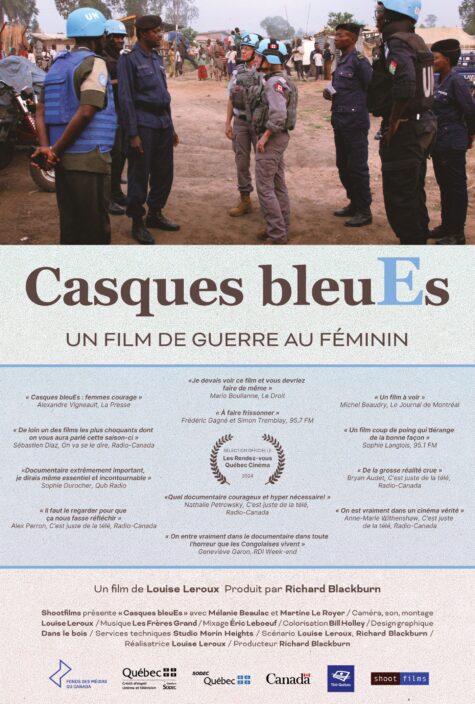
Room 510c - Casques bleuEs: a female war film
Viewing from 4 pm to 6 pm
This cinéma vérité film bears witness to the mission of Canadian policewomen deployed in the Democratic Republic of Congo. Mandated by Resolution 1325 of the United Nations Security Council, which recognized in October 2000 that women are the first victims of armed conflict, these peacekeepers are working with the Congolese national police to track down war criminals.
Shot in 2023 following the anti-UN riots, the film exposes the consequences of three decades of war in Eastern Congo, where rape has become a weapon of mass destruction.
In a country turned upside down, where impunity and corruption plague politics, the director juxtaposes the hopes of these peacekeepers for Resolution 1325 with the harsh reality they face on the ground.
A film by Louise Leroux. Produced by Dr. Richard Blackburn, PhD Shootfilms ©2024 casquesbleues.com
The presentation will be followed by a question-and-answer session with the director and producer.
This content has been updated on 2 December 2024 at 18h22.